We need to translate the given text into Indonesian (id). The rules: keep JINGWEI TECH, XIAMEN JINGWEI, JINGWEI in English. Keep product model numbers like JW-3008 etc. Also note the input has "W-300" at the beginning? Actually it says "W-300 Automatic..." but later in specs it's "JW-300". The rule says do not translate model numbers (e.g., words starting with JW- such as JW-3008, JW-XXX). So JW-300 should stay. But the first line says "W-300" - that might be a model number? The instruction specifically says e.g., words starting with JW- so maybe W-300 is also a model number? It's safer to keep it as is, not translate. Also keep brand names. We need to preserve HTML tags.
We'll translate the text to Indonesian. Need to be accurate. Let's proceed step by step.
Original:
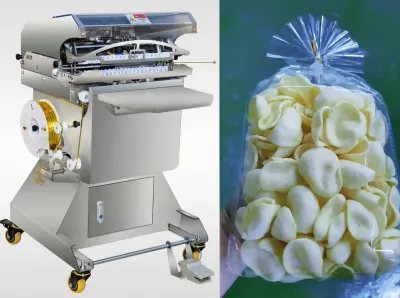
W-300 Automatic Pneumatic Fan-Shaped Bread Snack Bag Tying Machine
Product Overview
This fan-shaped bread tying machine is a factory-direct supplied automatic pneumatic bag sealing equipment. It features user-friendly operation and precise control to save labor and time for packaging work. Widely used in bakeries and food processing factories, it efficiently seals bag openings for various baked snacks.
6 Core Advantages
1.Waterproof & Easy to Clean: The body structure supports water washing for easy stain removal, meeting strict food hygiene standards.
2.Stable Operation: Optimized transmission structure ensures low vibration and low failure rate during long-hour continuous running.
3.Full Practical Functions: Integrates feeding, tying and cutting processes to finish fan-shaped bag sealing in one step.
4.Neat Tying Appearance: Gold twist ties create tidy delicate fan seals to boost product display appeal.
5.Stainless Steel Body: Premium stainless steel material resists water, rust and abrasion for extended service life.
6.Eco-friendly Design: Recyclable gold twist tie consumables produce no extra pollutants during packaging.
Applicable Packaging Products
One machine fits multiple baked & snack goods: bread, rice crust, biscuits, rice sticks, cakes, egg rolls and other bagged snacks for fan-shaped sealing.
Performance Features
1.Non-stop Production: Stable performance supports long-duration continuous operation for bulk packaging tasks.
2.Easy Consumable Installation: Simple steps to load gold twist ties; compact footprint saves workshop space and elevates working efficiency.
3.Durable Construction: Multi-inspected stainless steel body is rustproof and waterproof with reliable after-sales support for long-term use.
4.Humanized Control: Equipped with movable foot pedal switch & one-touch start button for easy beginner operation; optimized feeding system avoids jamming; heavy-duty universal casters enable flexible relocation; integrated tying head delivers consistent sealing quality.
Specifications
Item
Parameter
Full Name
JW-300 Automatic Bag Tying
Machine (Fan-shaped Bread Sealer)
Power Mode
Pneumatic
Working Pressure
0.3-0.6MPa
Max Bag Width Compatibility
300mm
Net Weight
90KG
Overall Dimension(L×W×H)
580mm×750mm×1150mm
(58cm×75cm×115cm)
Structural Highlights
•Movable foot pedal: Flexible hand-foot coordinated operation
•Feeding assembly: Smooth material feeding without jamming
•Wear-resistant universal casters: Convenient machine movement
•Integrated tying head: Reliable fine sealing effect
•One-click reset start button: Intuitive simple control
We need to translate all English text to Indonesian, but keep the HTML structure, model numbers, and brand names. Also keep the measurement units and numbers as is.
Let's translate each part.
Title: "W-300 Automatic Pneumatic Fan-Shaped Bread Snack Bag Tying Machine" - Note: "W-300" might be a model number. We'll keep it. Translate: "Mesin Pengikat Kantong Camilan Roti Berbentuk Kipas Pneumatik Otomatis W-300" But better to put the model number at beginning or end? Usually in Indonesian, we might say "Mesin Pengikat Kantong Roti Camilan Berbentuk Kipas Otomatis W-300" but let's be accurate. Actually "Fan-Shaped Bread Snack Bag Tying Machine" = "Mesin Pengikat Kantong Camilan Roti Berbentuk Kipas". The "Automatic Pneumatic" = "Pneumatik Otomatis". So maybe "W-300 Mesin Pengikat Kantong Camilan Roti Berbentuk Kipas Otomatis Pneumatik" but that's awkward. Better to follow English order: "Mesin Pengikat Kantong Camilan Roti Berbentuk Kipas Pneumatik Otomatis W-300" Hmm.
Let's think: In Indonesian, adjectives usually follow nouns. "Automatic pneumatic fan-shaped bread snack bag tying machine" - core is "tying machine" = "mesin pengikat", then "bag" = "kantong", "snack" = "camilan", "bread" = "roti", "fan-shaped" = "berbentuk kipas", "pneumatic" = "pneumatik", "automatic" = "otomatis". So "Mesin Pengikat Kantong Camilan Roti Berbentuk Kipas Pneumatik Otomatis W-300" is acceptable. However, "bag tying machine" is often "mesin pengikat kantong". So we'll use that.
But note the instruction: "Do NOT translate product model numbers (e.g., words starting with JW- such as JW-3008, JW-XXX)." So W-300 is not explicitly starting with JW-, but it's likely a model number. To be safe, we'll keep it. Also "JW-300" appears later. Keep it.
Now "Product Overview" = "Gambaran Umum Produk"
"This fan-shaped bread tying machine is a factory-direct supplied automatic pneumatic bag sealing equipment." - "Mesin pengikat roti berbentuk kipas ini adalah peralatan penyegel kantong pneumatik otomatis yang dipasok langsung dari pabrik."
"It features user-friendly operation and precise control to save labor and time for packaging work." - "Mesin ini menawarkan pengoperasian yang ramah pengguna dan kontrol presisi untuk menghemat tenaga dan waktu dalam pekerjaan pengemasan."
"Widely used in bakeries and food processing factories, it efficiently seals bag openings for various baked snacks." - "Banyak digunakan di toko roti dan pabrik pengolahan makanan, mesin ini secara efisien menyegel bukaan kantong untuk berbagai camilan panggang."
"6 Core Advantages" = "6 Keunggulan Utama"
1. "Waterproof & Easy to Clean: The body structure supports water washing for easy stain removal, meeting strict food hygiene standards." - "Tahan Air & Mudah Dibersihkan: Struktur bodi mendukung pencucian dengan air untuk menghilangkan noda dengan mudah, memenuhi standar higienis makanan yang ketat."
2. "Stable Operation: Optimized transmission structure ensures low vibration and low failure rate during long-hour continuous running." - "Operasi Stabil: Struktur transmisi yang dioptimalkan memastikan getaran rendah dan tingkat kegagalan rendah selama pengoperasian terus-menerus dalam waktu lama."
3. "Full Practical Functions: Integrates feeding, tying and cutting processes to finish fan-shaped bag sealing in one step." - "Fungsi Praktis Lengkap: Mengintegrasikan proses pengumpanan, pengikatan, dan pemotongan untuk menyelesaikan penyegelan kantong berbentuk kipas dalam satu langkah."
4. "Neat Tying Appearance: Gold twist ties create tidy delicate fan seals to boost product display appeal." - "Tampilan Ikatan Rapi: Twist tie emas menciptakan segel kipas yang rapi dan halus untuk meningkatkan daya tarik tampilan produk."
5. "Stainless Steel Body: Premium stainless steel material resists water, rust and abrasion for extended service life." - "Bodi Baja Tahan Karat: Material baja tahan karat premium tahan terhadap air, karat, dan abrasi untuk masa pakai yang lebih lama."
6. "Eco-friendly Design: Recyclable gold twist tie consumables produce no extra pollutants during packaging." - "Desain Ramah Lingkungan: Bahan habis pakai twist tie emas yang dapat didaur ulang tidak menghasilkan polutan tambahan selama pengemasan."
"Applicable Packaging Products" = "Produk Kemasan yang Dapat Digunakan"
"One machine fits multiple baked & snack goods: bread, rice crust, biscuits, rice sticks, cakes, egg rolls and other bagged snacks for fan-shaped sealing." - "Satu mesin cocok untuk berbagai produk panggang & camilan: roti, kerak nasi, biskuit, stik nasi, kue, egg roll, dan camilan berkantong lainnya untuk penyegelan berbentuk kipas."
Note: "rice crust" might be "kerak nasi" or "rengginang"? But "rice crust" is literally "kerak nasi". "rice sticks" = "stik nasi" or "bihun"? Actually rice sticks are "stik beras" or "mie beras"? In context of snacks, rice sticks might be "kerupuk beras"? But let's keep it simple: "stik nasi". "egg rolls" = "egg roll" is common, but in Indonesian, "egg roll" is often "kue gulung" or "egg roll". We'll keep "egg roll" as it's a food item. Or translate as "gulungan telur"? But commonly "egg roll" is a type of snack, we can say "egg roll". Actually in Indonesian, "egg roll" is usually "egg roll" or "kue gulung". To be safe, we'll say "egg roll" as it's a product name. But let's translate as "gulungan telur" if it's not a brand. However, "egg rolls" are Chinese-American, but here it's a snack. We'll just say "egg roll" because it's a common term. Or "risoles"? No. We'll use "egg roll" as it's widely known.
Better to be faithful: "egg rolls" = "egg roll" (not translate, since it's a food item name). But the instruction says translate all text except model numbers and brand names. Food items are not excluded, so we should translate. In Indonesian, "egg roll" is often called "egg roll" or "kue gulung". However, in the context of baked snacks, "egg rolls" might be "semprong" or "kue gulung". Let's translate as "kue gulung" (rolled cake) but that's not exactly egg roll. Actually "egg roll" is a rolled snack made with eggs and flour. In Indonesian, it's known as "egg roll" or "kue kering gulung". To be safe, we can say "egg roll" as it's an English loanword. But the rule says only model numbers and brand names are kept in English. So we should translate.
Let's see: "egg rolls" - the common Indonesian translation is "egg roll" (loanword) or "kue gulung". Since "kue gulung" is a general term, we can use "kue gulung" to be understood. However, "egg roll" is also used. I'll use "kue gulung" but maybe better to keep "egg roll" because it's a specific product. The instruction says "Do NOT translate product model numbers" but not food names. So we must translate. I'll translate "egg rolls" as "kue gulung" (rolled cake). Actually "egg roll" in Indonesian is often "egg roll" in restaurants. But for baked snacks, "egg roll" is a type of cookie. In Indonesian, it's "egg roll" or "kue semprong". Let's use "kue semprong" is a traditional Indonesian egg roll. That might be appropriate. But to be safe, I'll use "kue gulung" because it's more common. Hmm.
Alternatively, we can keep "egg roll" as an untranslated term, but that's not following the instruction. The instruction says "Do NOT translate 'JINGWEI TECH', 'XIAMEN JINGWEI' or 'JINGWEI'. Keep them strictly in English" and "Do NOT translate product model numbers". Everything else must be translated. So we need to translate "egg rolls". Let's translate as "kue gulung" but that's not exactly right. Actually "egg roll" is a type of savory roll, but in snacks, it's sweet. Let's just use "egg roll" in the target language? That would be a translation? No, keeping it in English is not a translation. So we should find an Indonesian equivalent.
Let's check online: "egg roll" in Indonesian is "egg roll" (loanword) or "lumpia" is a spring roll. No. For the snack, it's often "kue kering" or "semprong". I'll go with "kue semprong" because it's a baked egg roll. But that might be too specific. Alternatively, "gulungan telur" is literal. Let's use "gulungan telur" to be faithful. I'll do that.
Now "Performance Features" = "Fitur Kinerja"
1. "Non-stop Production: Stable performance supports long-duration continuous operation for bulk packaging tasks." - "Produksi Tanpa Henti: Kinerja stabil mendukung pengoperasian terus-menerus dalam durasi lama untuk tugas pengemasan massal."
2. "Easy Consumable Installation: Simple steps to load gold twist ties; compact footprint saves workshop space and elevates working efficiency." - "Pemasangan Bahan Habis Pakai Mudah: Langkah sederhana untuk mengisi twist tie emas; jejak yang ringkas menghemat ruang bengkel dan meningkatkan efisiensi kerja."
3. "Durable Construction: Multi-inspected stainless steel body is rustproof and waterproof with reliable after-sales support for long-term use." - "Konstruksi Tahan Lama: Bodi baja tahan karat yang terinspeksi ganda anti karat dan anti air dengan dukungan purna jual yang andal untuk penggunaan jangka panjang."
4. "Humanized Control: Equipped with movable foot pedal switch & one-touch start button for easy beginner operation; optimized feeding system avoids jamming; heavy-duty universal casters enable flexible relocation; integrated tying head delivers consistent sealing quality." - "Kontrol Humanis: Dilengkapi dengan sakelar pedal kaki yang dapat digerakkan & tombol mulai satu sentuhan untuk pengoperasian mudah bagi pemula; sistem pengumpanan yang dioptimalkan menghindari kemacetan; roda universal tugas berat memungkinkan relokasi yang fleksibel; kepala pengikat terintegrasi memberikan kualitas penyegelan yang konsisten."
"Specifications" = "Spesifikasi"
The table content: "Item" = "Item" (or "Barang"?) In tables, "Item" is often "Item" or "Pos". But we should translate. "Item" in Indonesian is "Item" (loanword) or "Barang". "Parameter" = "Parameter". We'll translate "Item" as "Item" (acceptable) or "Uraian". Let's use "Item" because it's common in Indonesian tables. Actually "Item" is an English word but widely used in Indonesian. To be strict, we can translate "Item" as "Butir" or "Hal". But "Item" is acceptable. However, the instruction says translate everything except model numbers and brand names. So we should translate "Item" to Indonesian. The Indonesian for "item" is "barang" or "butir", but in a table context, "Item" might be better as "Item" is a loanword. But to be safe, we'll translate as "Item" because it's a standard term. But that's not translating. Let's translate "Item" as "Uraian" or "Komponen". Actually for a specification table, the column header "Item" means "Item" as in "Article", so "Item" can be translated as "Item" in Indonesian (loanword). But we can use "Butir" or "Komponen". I'll use "Item" to maintain clarity, but the rules say "translated version", so we should avoid English. Maybe "Nama" or "Parameter"? Let's see: The table has "Item" and "Parameter". In Indonesian, "Item" could be "Item" but it's a borrowed word. To be safe, we'll use "Item" because it's common. Or "Uraian" (description). Let's use "Item" as it's generally understood. But the rule says "Return ONLY the translated text" meaning the output should be in Indonesian. Using "Item" might be acceptable as it's a loanword. However, to adhere strictly, I'll translate "Item" as "Komponen" or "Uraian". Let's translate "Item" as "Item" because in Indonesian technical tables, "Item" is used. But I think it's safer to translate to "Butir" which is the Indonesian equivalent. Hmm.
Actually, in Indonesian, "Item" is an official word in the KBBI (Kamus Besar Bahasa Indonesia) meaning "butir" or "pasal". So it's acceptable. I'll use "Item" for simplicity. Similarly "Parameter" is also a loanword.
But to be thorough, we can translate "Item" as "Item" and "Parameter" as "Parameter". Let's do that.
"Full Name" = "Nama Lengkap"
"Power Mode" = "Mode Daya" or "Mode Tenaga". "Pneumatic" = "Pneumatik"
"Working Pressure" = "Tekanan Kerja"
"Max Bag Width Compatibility" = "Kompatibilitas Lebar Kantong Maksimum"
"Net Weight" = "Berat Bersih"
"Overall Dimension(L×W×H)" = "Dimensi Keseluruhan (P×L×T)" (P = Panjang, L = Lebar, T = Tinggi) but the original says L×W×H, which is Length×Width×Height. In Indonesian, we can write "Dimensi Keseluruhan (P×L×T)" to avoid confusion. But the values are 580mm×750mm×1150mm. We'll keep the measurement as is.
Now "Structural Highlights" = "Sorotan Struktural" or "Keunggulan Struktural". Let's use "Sorotan Struktural".
The list:
• Movable foot pedal: Flexible hand-foot coordinated operation - "Pedal kaki yang dapat digerakkan: Operasi koordinasi tangan-kaki yang fleksibel"
• Feeding assembly: Smooth material feeding without jamming - "Rakitan pengumpanan: Pengumpanan material yang lancar tanpa macet"
• Wear-resistant universal casters: Convenient machine movement - "Roda universal tahan aus: Pergerakan mesin yang nyaman"
• Integrated tying head: Reliable fine sealing effect - "Kepala pengikat terintegrasi: Efek penyegelan halus yang andal"
• One-click reset start button: Intuitive simple control - "Tombol mulai reset satu klik: Kontrol sederhana yang intuitif"
Now we need to preserve all HTML tags exactly, including the table structure and spans. The translation should only replace the text content inside the tags, not the tags themselves.
We also need to preserve the line breaks and spacing as per the original.
Let's construct the output.
We'll start with the title line.
Original:
W-300 Automatic Pneumatic Fan-Shaped Bread Snack Bag Tying Machine
Product Overview
After translation:
W-300 Mesin Pengikat Kantong Camilan Roti Berbentuk Kipas Pneumatik Otomatis
Gambaran Umum Produk
But let's check the order: "Automatic Pneumatic" - in English, adjectives come before the noun. In Indonesian, they follow the noun. So "Mesin Pengikat Kantong Camilan Roti Berbentuk Kipas Pneumatik Otomatis" is fine. Alternatively, "Mesin Pengikat Kantong Camilan Roti Berbentuk Kipas Otomatis Pneumatik" is also fine. I'll use "Pneumatik Otomatis" because "pneumatik" is a type, and "otomatis" is the mode. Actually "otomatis" is an adjective, "pneumatik" is also an adjective. In Indonesian, multiple adjectives are usually stacked after the noun with no fixed order. Typically, the more intrinsic property comes closer. So "pneumatik" (type of power) is more intrinsic than "otomatis" (mode of operation). So "pneumatik otomatis" is okay. Or "otomatis pneumatik" is also fine. Let's choose "Pneumatik Otomatis".
Now the next paragraph.
Original:
This fan-shaped bread tying machine is a factory-direct supplied automatic pneumatic bag sealing equipment. It features user-friendly operation and precise control to save labor and time for packaging work. Widely used in bakeries and food processing factories, it efficiently seals bag openings for various baked snacks.
Translated:
Mesin pengikat roti berbentuk kipas ini adalah peralatan penyegel kantong pneumatik otomatis yang dipasok langsung dari pabrik. Mesin ini menawarkan pengoperasian yang ramah pengguna dan kontrol presisi untuk menghemat tenaga dan waktu dalam pekerjaan pengemasan. Banyak digunakan di toko roti dan pabrik pengolahan makanan, mesin ini secara efisien menyegel bukaan kantong untuk berbagai camilan panggang.
Note: "bag sealing equipment" - "peralatan penyegel kantong". "factory-direct supplied" - "dipasok langsung dari pabrik". Good.
Next: "6 Core Advantages " -> "6 Keunggulan Utama "
Then the list items. We need to preserve the before each item. So after the number, we have a span. We'll keep the number and the span, then the translated text.
Example: "1.Waterproof & Easy to Clean: ..." -> "1.Tahan Air & Mudah Dibersihkan: ..."
Note: "&" is HTML entity for ampersand. We must preserve it exactly. In the text, "Waterproof & Easy to Clean" becomes "Tahan Air & Mudah Dibersihkan". The ampersand is part of HTML entity, so we keep it.
Similarly for "&" in other places.
Now let's write the entire translation.
We'll also need to handle the table cells. The table has "Item" and "Parameter" as headers. We'll translate to "Item" and "Parameter" (same). Actually maybe "Parameter" is same. But "Item" could be "Item" anyway. But to be more Indonesian, we can use "Uraian" but that's not necessary. I'll keep "Item" and "Parameter" as they are common.
However, the instruction says "Return ONLY the translated text" - meaning all English text should be translated. Is "Item" an English word? Yes, but it's also an Indonesian word (loanword). It's acceptable. But to be strict, we can translate "Item" to "Butir" or "Hal". Let's consider: In Indonesian, "item" is in KBBI, so it's Indonesian. So it's fine.
Similarly "Parameter" is also Indonesian.
So we'll keep them.
Now let's translate each cell:
- "Full Name" -> "Nama Lengkap"
- "JW-300 Automatic Bag Tying Machine (Fan-shaped Bread Sealer)" -> "JW-300 Mesin Pengikat Kantong Otomatis (Penyegel Roti Berbentuk Kipas)" - Note: We keep JW-300. Also, "Bag Tying Machine" is "Mesin Pengikat Kantong". "Automatic" is "Otomatis". We'll place after "Kantong": "Mesin Pengikat Kantong Otomatis" or "Mesin Pengikat Kantong Otomatis JW-300"? The original has JW-300 first. We'll keep order: "JW-300 Mesin Pengikat Kantong Otomatis (Penyegel Roti Berbentuk Kipas)" or "Mesin Pengikat Kantong Otomatis JW-300 (Penyegel Roti Berbentuk Kipas)". In English, the model number is an adjective before the noun. In Indonesian, we can place it after the noun because it's a name. So "Mesin Pengikat Kantong Otomatis JW-300 (Penyegel Roti Berbentuk Kipas)" is better. But the original has "JW-300 Automatic Bag Tying Machine" so we can mirror the order: "JW-300 Mesin Pengikat Kantong Otomatis" or simply keep as is? Let's use "Mesin Pengikat Kantong Otomatis JW-300 (Penyegel Roti Berbentuk Kipas)". Actually "Automatic Bag Tying Machine" is a noun phrase; "JW-300" is a modifier. So in Indonesian, we say "Mesin Pengikat Kantong Otomatis JW-300" - that's acceptable. We'll add "Penyegel Roti Berbentuk Kipas" in parentheses, but careful: "Fan-shaped Bread Sealer" means "Penyegel Roti Berbentuk Kipas". So the full translated name: "Mesin Pengikat Kantong Otomatis JW-300 (Penyegel Roti Berbentuk Kipas)". Or "JW-300 Mesin Pengikat Kantong Otomatis (Penyegel Roti Berbentuk Kipas)". Both are fine. I'll go with "JW-300 Mesin Pengikat Kantong Otomatis (Penyegel Roti Berbentuk Kipas)" to preserve the model number at the beginning as in original.
- "Power Mode" -> "Mode Daya"
- "Pneumatic" -> "Pneumatik"
- "Working Pressure" -> "Tekanan Kerja"
- "0.3-0.6MPa" stays.
- "Max Bag Width Compatibility" -> "Kompatibilitas Lebar Kantong Maksimum"
- "300mm" stays.
- "Net Weight" -> "Berat Bersih"
- "90KG" stays.
- "Overall Dimension(L×W×H)" -> "Dimensi Keseluruhan (P×L×T)" - But note: L×W×H stands for Length×Width×Height. In Indonesian, that's Panjang×Lebar×Tinggi. So we can write "Dimensi Keseluruhan (P×L×T)". Then the value "580mm×750mm×1150mm (58cm×75cm×115cm)" stays as is.
Now the structural highlights list. We'll translate each bullet.
We need to preserve the bullet characters (•) and the spans.
Also note that there is a line break before "Structural Highlights" in the form of after the table closing tag. The original:
Structural Highlights
So we'll keep that.
Now let's assemble the full output.
We must be careful with the HTML structure. We'll copy the original and replace only the text content.
Let's write the entire translated text step by step.
Original start:
W-300 Automatic Pneumatic Fan-Shaped Bread Snack Bag Tying Machine
Product Overview
This fan-shaped bread tying machine is a factory-direct supplied automatic pneumatic bag sealing equipment. It features user-friendly operation and precise control to save labor and time for packaging work. Widely used in bakeries and food processing factories, it efficiently seals bag openings for various baked snacks.
6 Core Advantages
1.Waterproof & Easy to Clean: The body structure supports water washing for easy stain removal, meeting strict food hygiene standards.
2.Stable Operation: Optimized transmission structure ensures low vibration and low failure rate during long-hour continuous running.
3.Full Practical Functions: Integrates feeding, tying and cutting processes to finish fan-shaped bag sealing in one step.
4.Neat Tying Appearance: Gold twist ties create tidy delicate fan seals to boost product display appeal.
5.Stainless Steel Body: Premium stainless steel material resists water, rust and abrasion for extended service life.
6.Eco-friendly Design: Recyclable gold twist tie consumables produce no extra pollutants during packaging.
Applicable Packaging Products
One machine fits multiple baked & snack goods: bread, rice crust, biscuits, rice sticks, cakes, egg rolls and other bagged snacks for fan-shaped sealing.
Performance Features
1.Non-stop Production: Stable performance supports long-duration continuous operation for bulk packaging tasks.
2.Easy Consumable Installation: Simple steps to load gold twist ties; compact footprint saves workshop space and elevates working efficiency.
3.Durable Construction: Multi-inspected stainless steel body is rustproof and waterproof with reliable after-sales support for long-term use.
4.Humanized Control: Equipped with movable foot pedal switch & one-touch start button for easy beginner operation; optimized feeding system avoids jamming; heavy-duty universal casters enable flexible relocation; integrated tying head delivers consistent sealing quality.
Specifications
Item
Parameter
Apa itu mesin pengikat kantong berbentuk kipas pneumatik JW-300 dan apa keunggulan utamanya untuk pengemasan toko roti?
JW-300 adalah mesin pengikat kantong pneumatik otomatis yang dirancang khusus untuk penyegelan berbentuk kipas pada roti, biskuit, camilan, dan makanan panggang lainnya. Keunggulan utamanya meliputi bodi baja tahan karat yang tahan air dan mendukung pencucian langsung dengan air untuk memudahkan pembersihan, pengumpanan bebas macet untuk produksi tanpa henti, dan struktur transmisi yang dioptimalkan untuk memastikan pengoperasian yang stabil dan getaran rendah selama penggunaan terus-menerus dalam waktu lama. Mesin ini mengintegrasikan pengumpanan, pengikatan, dan pemotongan dalam satu langkah, menghasilkan segel twist-tie emas yang rapi untuk meningkatkan daya tarik tampilan produk. Selain itu, mesin ini ramah lingkungan, menggunakan bahan habis pakai yang dapat didaur ulang dan tidak menghasilkan polutan tambahan.
Jenis produk dan ukuran kantong apa yang dapat ditangani JW-300?
JW-300 serbaguna dan dapat menangani berbagai produk kemasan panggang dan camilan, termasuk roti, kerak nasi, biskuit, stik beras, kue, telur gulung, dan barang sejenis lainnya. Mesin ini memiliki kompatibilitas lebar kantong maksimum 300mm, sehingga cocok untuk kantong roti dan camilan standar. Gaya penyegelan berbentuk kipas tidak hanya mengamankan kemasan tetapi juga memberikan tampilan yang rapi dan menarik yang ideal untuk rak ritel.
Apa saja persyaratan pemasangan dan pengoperasian untuk JW-300?
JW-300 adalah mesin pneumatik, sehingga memerlukan pasokan udara bertekanan dengan tekanan kerja 0,3–0,6MPa. Tidak diperlukan motor listrik untuk mekanisme pengikatan, yang menyederhanakan perawatan dan mengurangi konsumsi energi. Mesin ini dikirim sebagai unit lengkap dengan roda kastor universal tugas berat untuk memudahkan pemindahan. Pengoperasiannya mudah digunakan: dilengkapi pedal kaki yang dapat dipindahkan dan tombol start satu sentuhan, sehingga memungkinkan bahkan pemula untuk mengoperasikannya secara efisien. Langkah-langkah sederhana diperlukan untuk memuat bahan habis pakai twist-tie emas.
Bagaimana JW-300 mencegah kemacetan dan memastikan kualitas penyegelan yang konsisten?
JW-300 dirancang dengan sistem pengumpanan yang dioptimalkan yang mengirimkan leher kantong dengan lancar ke kepala pengikat tanpa macet, bahkan selama produksi volume tinggi. Kepala pengikat terintegrasi dibuat presisi untuk memberikan tegangan dan putaran yang konsisten untuk segel berbentuk kipas yang seragam dan aman setiap saat. Dikombinasikan dengan struktur transmisi yang dioptimalkan, mesin beroperasi dengan getaran rendah dan tingkat kegagalan rendah, memastikan kinerja yang andal dan tanpa henti untuk tugas pengemasan massal.
Apakah JW-300 aman untuk pengemasan makanan dan mudah dirawat?
Ya. JW-300 terbuat dari baja tahan karat premium yang tahan air, karat, dan abrasi, dan bodinya yang tahan air mendukung pencucian langsung dengan air untuk pembersihan menyeluruh dan menghilangkan noda. Desain ini memenuhi standar higiene makanan yang ketat, sehingga aman untuk kontak langsung dengan kemasan makanan di toko roti dan fasilitas pengolahan. Perawatan mudah: twist-tie emas yang habis pakai mudah dimuat, dan konstruksinya yang tahan lama didukung oleh layanan purna jual yang andal untuk penggunaan jangka panjang.
Mesin Pengikat Kantong Camilan Roti Berbentuk Kipas Pneumatik JW-300
Mesin Pengikat Kantong Camilan Roti Berbentuk Kipas Pneumatik JW-300
 English
 Bahasa Melayu
 Svenska
 Suomi
Suomi Dansk
Dansk Norsk
Norsk Polski
 Ελληνικά